
How to Sell on Shopee in Singapore: A Complete Step-by-Step Guide for 2026
Shopee is one of the most visited marketplaces in Singapore, and Singaporean shoppers spend more per order than almost anyone else in the region. Delivery is fast, buyers are comfortable paying online, and opening a shop costs nothing upfront.
This guide explains who can sell, which documents are needed, what the fees look like in Singapore dollars, and how to win your first orders on the platform.

Overview: What You Should Know Before Selling on Shopee Singapore
Singapore has its own rules, fees, and buyer expectations. A few minutes here will save you real money and rework later.
Why Shopee Is the Top Marketplace in Singapore
Shopee sits among the most visited shopping sites in Singapore, and the 9.9 mega sale actually started here as Shopee’s birthday event.
Buyers have high spending power, delivery across the island takes a day or two, and mega sales like 9.9, 10.10, 11.11, and 12.12 bring reliable traffic spikes.
Singapore also works well as a regional base, since a shop here can later expand into other markets through Shopee’s own programs.
Who Can Sell on Shopee Singapore?
Three groups can open a shop. Singapore residents can register as individuals with an NRIC, which is the fastest route.
Registered businesses sign up with their ACRA profile and UEN, the proper setup once selling becomes serious.
Overseas sellers can reach Singapore buyers through Shopee’s cross-border program, or set up a local company, and both routes are covered in the FAQ below.
The Types of Shopee Seller Accounts in Singapore
Before you register, pick the account type that fits your situation. Each one comes with different requirements and fees.
Marketplace Seller (Individual or Business)
The standard option and where most Singapore sellers start. Registration is quick with an NRIC or ACRA papers, there are no upfront costs, and you compete on price, service, and reviews.
Shopee Mall Seller
Shopee Mall is reserved for brand owners and authorized distributors. Stores get a badge, better search placement, and access to exclusive campaigns.
In return, the requirements are stricter, commission is higher, and buyers expect authentic products with a longer return window.
Cross-Border Selling into the Singapore
Sellers based outside Singapore can list on the local site through Shopee’s cross-border program. A registered business is required, and shipping runs through Shopee’s cross-border logistics. It suits sellers testing Singapore demand without opening a local company.

What You Need Before You Register
Have these ready: an NRIC or passport for individual accounts, your ACRA business profile and UEN for corporate accounts, a Singapore phone number, a local bank account for payouts, and product photos.
The bank account name must match the registered name, so sort that out first. A handful of products ready to list will also speed things up, since new shops must list items to become fully active.
Shopee Singapore Seller Fees Explained (in SGD)
Registration and listing are free, and there are no monthly charges. Fees apply when something sells.
Expect three main ones: a commission fee that depends on your category and seller tier, a transaction fee of around 2 percent on the amount the buyer pays, and service fees for optional programmes like Free Shipping and Coins Cashback.
Every fee Shopee Singapore quotes already includes the 9 percent GST, so nothing extra is added on top. New sellers currently pay zero commission for their first months. Rates change, so check the fee page in Seller Centre.
How to Start Selling on Shopee Singapore: Step-by-Step
This guide covers Singapore specifically. Selling in another market? Read our guides for Shopee in Thailand, Malaysia, the Philippines, Indonesia, and Vietnam, or start with the general How to sell on Shopee guide.
The ten steps below match how Seller Centre works in Singapore, with the local documents, fees, and couriers included where they matter.
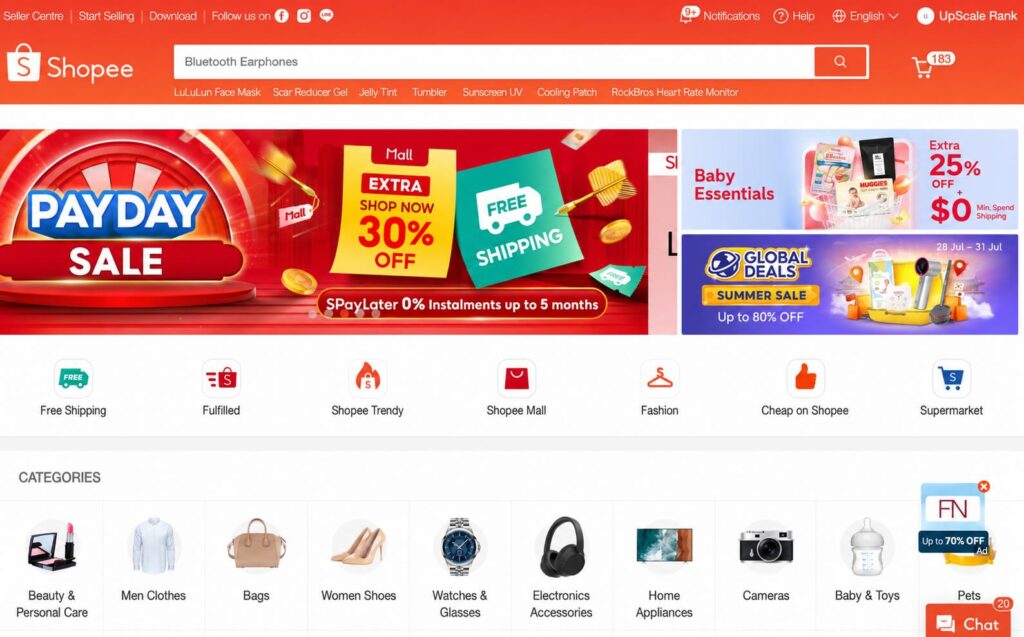
Step 1: Register on Shopee Singapore Seller Centre
Go to seller.shopee.sg or open the app and sign up with a phone number, an email address, or an existing Shopee buyer account. A one-time password will be sent to confirm your number. Fill in your name and address and accept the terms.
The form takes about ten minutes. Use details that match your NRIC or ACRA records, because mismatched information causes problems at verification and payout later.
Step 2: Verify Your Identity
After sign-up, Shopee asks for documents to confirm who you are. Uploads are reviewed by the Shopee team, and verification usually clears within a few business days.
Documents for Individual Sellers
An NRIC is enough for most residents. Upload a clear image of it, and make sure the name matches your bank account exactly. Blurry images are a frequent cause of delays, so scan the card properly in good light.
Documents for Registered Businesses
Corporate accounts need the ACRA business profile, the UEN, and a company bank account under the registered name.
GST registration details may also be requested where relevant. Approval takes a little longer than individual accounts, so submit everything in one clean batch.
Step 3: Set Up Your Shop Profile
Once verified, open Seller Centre and complete your shop profile. Pick a shop name that is short and easy to remember, because changing it later can be a hassle. Add a clear logo, a banner, and a short description with your main keywords.
The Shop Decoration tool lets you add featured sections and banners for free. Singapore buyers do check shop pages and ratings before ordering, so a complete profile quietly lifts conversion.
Step 4: Link Your Bank Account and Seller Balance
Head to the finance section and link your Singapore bank account. The account name has to match your registered name or company name, otherwise withdrawals will fail.
Sales money lands in your Seller Balance after the order is delivered and the return window closes, and you withdraw manually or on an automatic weekly schedule. Set this up before your first sale so the money flows without delays.
Step 5: List Your First Products
New shops must list products to become fully active, usually at least five within the first 30 days. Items can be added one by one in Seller Centre, uploaded in bulk with a spreadsheet, or synced through a listing tool. Whichever method you use, three things decide how well each listing performs.
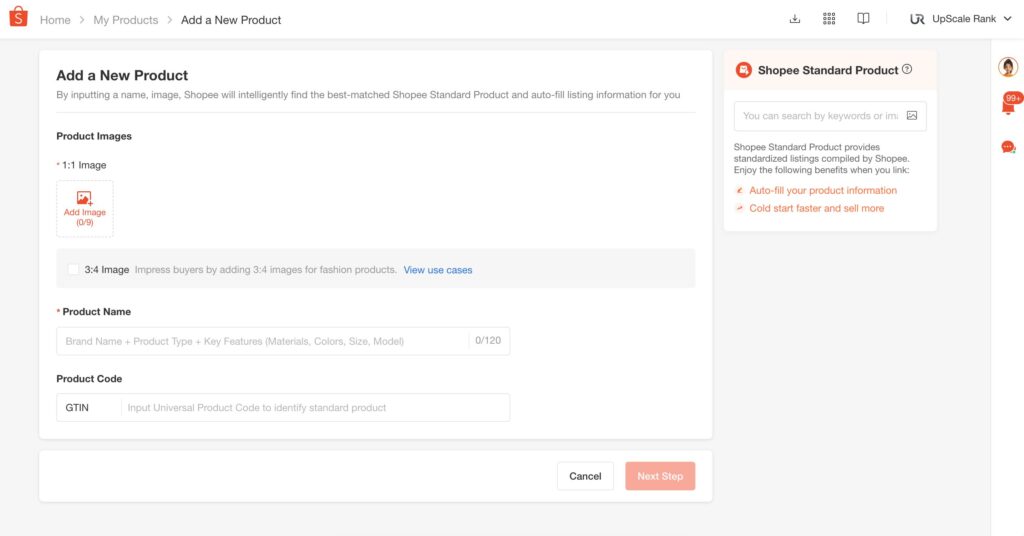
Write Titles and Descriptions That Rank in Shopee Search
Put the most important keyword early in the title, since search reads the first characters hardest. Singapore shoppers search in English and often type exact brand names and model numbers, so include them.
Write descriptions in plain language with short lines and real answers about material, size, warranty, and usage. Stuffed titles look spammy and get skipped.
Product Photo and Video Requirements
Use a clean, sharp main photo, then add shots of the back, sides, and details, plus one photo of the product in real use.
A short video lifts conversion noticeably on Shopee, so add one where you can. Buyers here compare listings closely, and better photos usually win the click.
Categories, Attributes, and Variations
Pick the most accurate category, not the busiest one. Fill in every attribute field, even the optional ones, because attributes feed the search filters buyers use.
Set up size and color variations inside one listing instead of separate listings, so reviews and sales history stay together.
Step 6: Price Your Products with Fees and GST in Mind
Set prices with every cost on the table: product cost, commission, transaction fee, programme service fees, packaging, and any voucher you plan to run.
The quoted fees already include GST, which makes the math simpler than in most markets. Build a spreadsheet per product, add your target profit, and work backwards to the listing price.
Leave room for campaign discounts, since promotions usually require a genuine price cut, and price checks against competing listings are worth doing monthly.
Step 7: Set Up Shipping and Delivery
Delivery in Singapore is fast, cheap, and well covered, and you control which channels are switched on. Set this up carefully, because delivery speed directly affects your ranking and reviews.
Meet Singapore’s Fast Delivery Expectations
Standard delivery across the island runs one to three days, and buyers notice anything slower. Ship on time, keep your handover rate clean, and pack orders the same day where possible.
In a market this small, delivery speed is one of the few ways a new shop can immediately match the big players.
Join the Free Shipping and Coins Cashback Programs
Both programs charge a service fee per order in exchange for real visibility. Free shipping vouchers appear on your listings and remove the most common checkout hesitation, while Coins Cashback rewards repeat buyers. Run the numbers on cheap items first, since percentage fees bite harder on small baskets.

Step 8: Learn the Basics and Launch
New sellers get a set of onboarding missions inside Seller Centre, and free lessons are available through the Seller Education Hub.
The materials cover policies, order handling, and the main tools, and finishing the missions often unlocks small rewards like vouchers or ad credits.
Go through them properly instead of clicking past. Once your listings are approved and shipping is set, your shop is live and ready for orders.
Step 9: Promote Your Shop and Win Your First Orders
A live shop with no traffic sells nothing, so promotion starts on day one. Shopee gives Singapore sellers free tools that raise visibility, and small budgets go a long way in the first weeks.
Focus on the three tools below before spending on anything else, and track what each one actually brings in.
Join Shopee Campaigns and Mega Sales
Open the Marketing Centre and check the campaign section. Mega sales like 9.9, 10.10, 11.11, and 12.12 bring the year’s biggest traffic, and smaller monthly themed campaigns are easier to enter. Each campaign has criteria on price, stock, and rating, so register early and prepare stock before the date.
Vouchers, Flash Deals, and Bundle Deals
Shop vouchers, Flash Deals, and bundle deals are set up in a few clicks. A small voucher paired with free shipping removes most buyer hesitation.
Flash Deals create urgency, and bundles raise the average order value. Rotate these tools instead of running everything at once, then keep what performs.
Shopee Ads and Shopee Live
Shopee Ads push your products higher in search results and onto discovery pages. Start with a small daily budget on your best listings, run it for a week, and check the cost per order before scaling.
Shopee Live is worth testing too. Live selling is growing in Singapore, and a simple honest product demo can outperform polished ads.

Step 10: Track Performance with Business Insights
Business Insights is the data dashboard inside Seller Centre, and it should be checked weekly at minimum. Watch three numbers: visitors, conversion rate, and average order value.
Low traffic points at titles, keywords, or ads. Decent traffic with poor conversion points at price, images, or reviews.
Work toward Preferred Seller status as well, which rewards high ratings, low cancellations, and fast chat replies. The badge lifts trust, visibility, and campaign access.
Frequently Asked Questions About Selling on Shopee Singapore
Here are the questions new sellers in Singapore ask most, answered briefly.
Can foreigners sell on Shopee Singapore?
Yes, through two routes. An overseas business can join Shopee’s cross-border program and sell into Singapore without a local entity, which is the simpler start.
The alternative is incorporating a Singapore company through ACRA, which requires at least one locally resident director, then registering the shop under the company.
Incorporation is straightforward by regional standards, and many overseas brands choose it once Singapore sales justify local stock.
Do I need to register a business or pay tax to sell on Shopee in Singapore?
Individuals can start selling with just an NRIC, no company needed. Income earned on Shopee is still taxable and should be declared to IRAS.
GST registration becomes mandatory once annual taxable turnover passes S$1 million, which most small sellers will not hit early on. Keep simple records of sales and costs, and spend an hour with an accountant once orders become regular.
What is Preferred Seller status and how do I get it?
Preferred Seller is a badge granted to shops with strong service records: high shop rating, low cancellation rate, fast chat responses, and steady sales, reviewed on a regular cycle.
The badge shows on your listings, buyers filter searches by it, and it unlocks better programme and campaign access. Treat it as your first real milestone after launch, usually reachable within a few months of consistent service.
Can I use Singapore as a base to sell across Southeast Asia?
Yes, and many sellers do exactly that. The Shopee International Platform lets an established Singapore shop list products on Shopee’s other markets, with translation and cross-border logistics handled by the platform.
It is one of the lowest-effort ways to test regional demand. Once a market takes off, a local shop with local stock usually serves it better, since domestic delivery speed wins rankings.
How do returns and refunds work for Singapore buyers?
Buyers can request a return or refund within the stated window after delivery. Requests are reviewed in Seller Centre, where you accept or dispute with photos and evidence.
Return shipping is paid by the party at fault in most cases. Respond quickly, because ignored requests are decided in the buyer’s favor and slow handling drags down your rating. Singapore buyers review actively, and a fair returns experience often earns a positive one.
Should I sell on Lazada Singapore too?
For most sellers, yes. Lazada holds a strong position in Singapore, particularly through LazMall and RedMart, and its buyer base only partly overlaps with Shopee’s.
A second store usually adds sales without much extra product work. Keep stock and prices in sync between the two so you never oversell. Our guide on how to sell on Lazada in Singapore walks through the setup.
Conclusion: Start Selling on Shopee Singapore Today
Selling on Shopee Singapore needs no money upfront, just the right documents and some preparation. Register with your NRIC or ACRA papers, link a matching bank account, list well-written products, and ship fast, because speed is what Singapore buyers notice first.
After launch, campaigns, vouchers, and your shop data decide how fast you grow. New to Shopee overall? Start with the general How to sell on Shopee guide.
Need help with setup or optimization? Get in touch.